
Why Every Business Needs Live Commodity Data Now
By
Ejaz Ahmed29 Dec 2025 • 7 min read
Imagine this. You lock a large aluminum contract at yesterday’s closing price. Overnight, a geopolitical shock hits, and prices jump 5 percent, wiping out your margin before work even starts.
Commodity prices are no longer background noise. They drive your supply chain, cash flow, and planning in real time. Relying on delayed commodity data or static spreadsheets is a risk most teams can no longer afford.
Markets move in seconds across energy, metals, and agriculture. Commodities data enrichment helps turn raw price swings into signals you can actually act on. With live data feeds, teams spot changes early and adjust before losses stack up.
Businesses using real time commodity data move faster. They make clearer calls under pressure. And they protect margins when volatility hits without warning.
What Is Live Commodity Data?
Live commodity market data gives you up-to-date prices for key raw materials. It shows what the market values a commodity at right now. It reflects supply and demand changes as they happen.
Market data can be delayed or delivered in real time through APIs. Delayed data usually arrives 15 to 30 minutes late. Real time feeds show prices instantly. That speed supports quicker decisions.
This includes commodities like gold, silver, crude oil, wheat, corn, and sugar. It also includes regulated sources such as the Commodity Futures Trading Commission data. APIs make this information machine-readable and easier to process.
Strong commodity data insights depend on speed, accuracy, and context. Old prices increase risk and weaken analysis when markets move fast. That is why relying on delayed data is risky today.
The Cost Of Using Delayed Or Manual Commodity Market Data
Relying on delayed commodity market data quietly drains money. In volatile markets, hours separate profit from loss. Manual entry of commodities data increases risk.
A single typo in a CSV can break forecasts. Slow updates hide brief price windows and distort prices. Missing those moments hurts decisions across a country.
Using stale commodity data skews costs for metals and energy. The same problem affects agriculture when inputs move fast. Teams lack clear benchmarks to judge sudden swings.
Without commodities historical data, trends get misread. By December, reports feel outdated, and teams forget to share. Keep information updated, add market data, and set a contact.
Fast systems react before markets reset each day. They align buying and selling with real signals in time. That discipline keeps commodities competitive and resilient globally.
Industries That Depend On Live Commodity Data
Manufacturing And Supply Chain
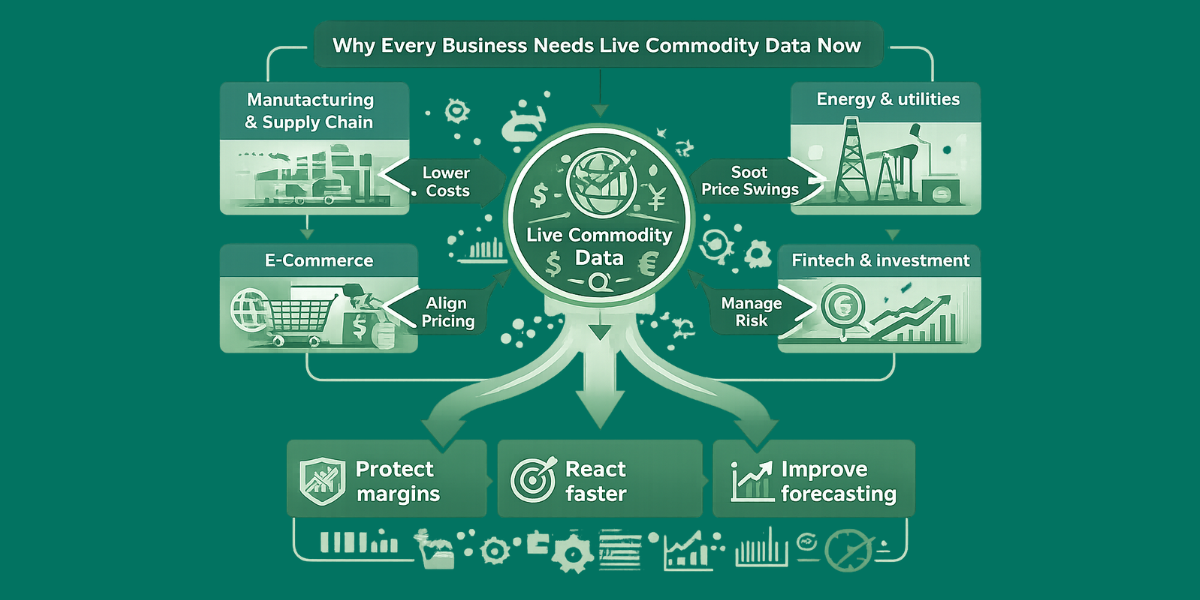
Manufacturers need to track raw material costs to protect their margins. Live data supports smarter supplier talks through a commodities pricing data feed. If you see falling copper prices, you can push for better contract terms.
Energy And Utilities
Oil, gas, and fuel prices move constantly across global markets. Utilities track live inputs to manage risk using commodity classic future dates. Accurate forecasts depend on knowing the market position minute by minute.
Fintech, Trading, And Investment Platforms
Trading products fail without real time prices flowing into systems. Teams use a commodity data api for models, alerts, and exposure control. A short delay can break strategies in fast-moving markets.
E-commerce And Global Businesses
International sellers manage product costs alongside shifting exchange rates. A commodity data integration platform keeps pricing, logistics, and finance in step. These commodity data solutions keep margins aligned.What Is Live Commodity Data?
Live commodity market data gives you up-to-date prices for key raw materials. It shows what the market values a commodity at right now. It reflects supply and demand changes as they happen.
Market data can be delayed or delivered in real time through APIs. Delayed data usually arrives 15 to 30 minutes late. Real time feeds show prices instantly. That speed supports quicker decisions.
This includes commodities like gold, silver, crude oil, wheat, corn, and sugar. It also includes regulated sources such as the Commodity Futures Trading Commission data. APIs make this information machine-readable and easier to process.
Strong commodity data insights depend on speed, accuracy, and context. Old prices increase risk and weaken analysis when markets move fast. That is why relying on delayed data is risky today.
The Cost Of Using Delayed Or Manual Commodity Market Data
Relying on delayed commodity market data quietly drains money. In volatile markets, hours separate profit from loss. Manual entry of commodities data increases risk.
A single typo in a CSV can break forecasts. Slow updates hide brief price windows and distort prices. Missing those moments hurts decisions across a country.
Using stale commodity data skews costs for metals and energy. The same problem affects agriculture when inputs move fast. Teams lack clear benchmarks to judge sudden swings.
Without commodities historical data, trends get misread. By December, reports feel outdated, and teams forget to share. Keep information updated, add market data, and set a contact.
Fast systems react before markets reset each day. They align buying and selling with real signals in time. That discipline keeps commodities competitive and resilient globally.
Industries That Depend On Live Commodity Data
Manufacturing And Supply Chain
Manufacturers need to track raw material costs to protect their margins. Live data supports smarter supplier talks through a commodities pricing data feed. If you see falling copper prices, you can push for better contract terms.
Energy And Utilities
Oil, gas, and fuel prices move constantly across global markets. Utilities track live inputs to manage risk using commodity classic future dates. Accurate forecasts depend on knowing the market position minute by minute.
Fintech, Trading, And Investment Platforms
Trading products fail without real time prices flowing into systems. Teams use a commodity data api for models, alerts, and exposure control. A short delay can break strategies in fast-moving markets.
E-commerce And Global Businesses
International sellers manage product costs alongside shifting exchange rates. A commodity data integration platform keeps pricing, logistics, and finance in step. These commodity data solutions keep margins aligned.
Why APIs Are The Best Way To Access Live Commodity Prices
Manual scraping and PDF reports slow everything down. APIs are the cleanest way to get live prices without babysitting the process. They automate delivery and provide structured data like commodity futures data that updates as the market changes.
APIs grow with you as needs expand. You can feed live prices and commodity futures historical data straight into dashboards, ERPs, or models. The setup stays stable while usage scales.
Feature | Manual spreadsheets | Live API integration |
Update speed | Updates take hours or days | Updates arrive in seconds |
Accuracy | Easy to break with human errors | Clean and precise JSON data |
Scalability | Breaks as data grows | Handles large volumes easily |
Automation | Requires manual work | Runs automatically end-to-end |
How CommodityPriceAPI Solves These Problems
CommodityPriceAPI is built for teams that need clear and reliable price signals. It focuses on accuracy, speed, and ease of use. You get the data you need without extra setup or confusion.
Real-Time And Historical Commodity Prices
CommodityPriceAPI gives access to prices for more than 130 commodities. This covers energy, metals, and agriculture used across global markets. You can pull live data or long-term commodity trade data going back to 1990.
Simple, Developer-Friendly JSON API
The API is fast and easy to work with from day one. It follows REST standards and uses clean JSON responses. Most developers start pulling data within minutes using the /v2/rates/latest endpoint.
Custom Quote Currencies
Many platforms lock prices to USD by default. CommodityPriceAPI lets you convert values into over 175 currencies. This helps teams manage commodity data management for regional pricing and reporting.
Trusted And Reliable Data Sources
Prices come from trusted global exchanges and verified sources. The system is built for real production use, where mistakes are expensive. You can safely use this data for forecasts, models, and pricing logic.
Flexible Pricing With No Contracts
You can start small and stay flexible. Plans move from Lite to Premium as your usage grows. There is also an unlimited free trial with no contracts to lock you in.
Real Use Cases: How Businesses Use Live Commodity Data
Teams use live commodity data to build dashboards that executives check daily. The data feeds machine learning models that predict near-term price movement. Systems also send alerts when prices cross defined limits or risk thresholds.
Pricing engines use the API to update prices in real time. This protects margins when raw material costs change quickly. Analysts run fluctuation analysis to track asset performance over long periods.
How Fast Can You Get Started?
Getting started is quick and simple with a clear setup flow right away. Create an account in seconds with no credit card or extra setup steps. Then you can copy your API from the dashboard.
Choose the commodities you want to track in your application. Send your first API request using a clean and simple JSON call. Live market data starts flowing into your app within minutes almost immediately.
Why Now Matters More Than Ever
Timing drives outcomes in the global economy. Markets move faster, and supply chains break more often. Inflation adds pressure, so small price changes directly affect procurement decisions.
Old data causes mistakes. Live data helps teams react as prices change. By the time others notice the shift, you have already updated your numbers and moved on.
Conclusion
Live commodity data is no longer optional for modern teams. Prices shift fast across energy, metals, and agriculture. Acting on delayed commodity data increases risk and weakens everyday decisions.
APIs replace copying files and fixing sheets. Prices flow straight into your dashboards and tools as they change. Nothing to clean up. Nothing to chase. This makes commodity data management simpler and more reliable at scale.
Teams that use live feeds see changes sooner. They adjust costs, contracts, and forecasts while others catch up. That speed turns commodity data insights into real margin protection.
FAQs
What Is Live Commodity Price Data?
It is real-time pricing for raw materials like gold, oil, and grain, delivered via a digital feed for immediate use.
How Often Are Prices Updated?
Prices can refresh as often as every 60 seconds. The exact timing depends on your plan. You choose what fits your use case.
Which Commodities Are Covered?
You get access to 130 plus commodities. This includes metals, energy, and farm products. The list covers most common use cases.
Can I Get Historical Prices?
Yes. You can pull historical data for most commodities. Records go back to January 1, 1990.
Can I Convert Prices Into Other Currencies?
Yes, you can. Prices can be converted into more than 175 global currencies. It only takes a simple query setting.
Is CommodityPriceAPI Free To Use?
There is a free plan for testing and integration. You can try things out before committing. No pressure to upgrade early.
How Accurate Is The Data?
The data comes from trusted exchanges and financial institutions. It is checked and kept consistent. You can rely on it for real analysis.
Is There A Rate Limit?
The Lite plan has a limit of 10 requests per minute, while our higher plans offer much greater flexibility.
Stop guessing. Start using real commodity data.